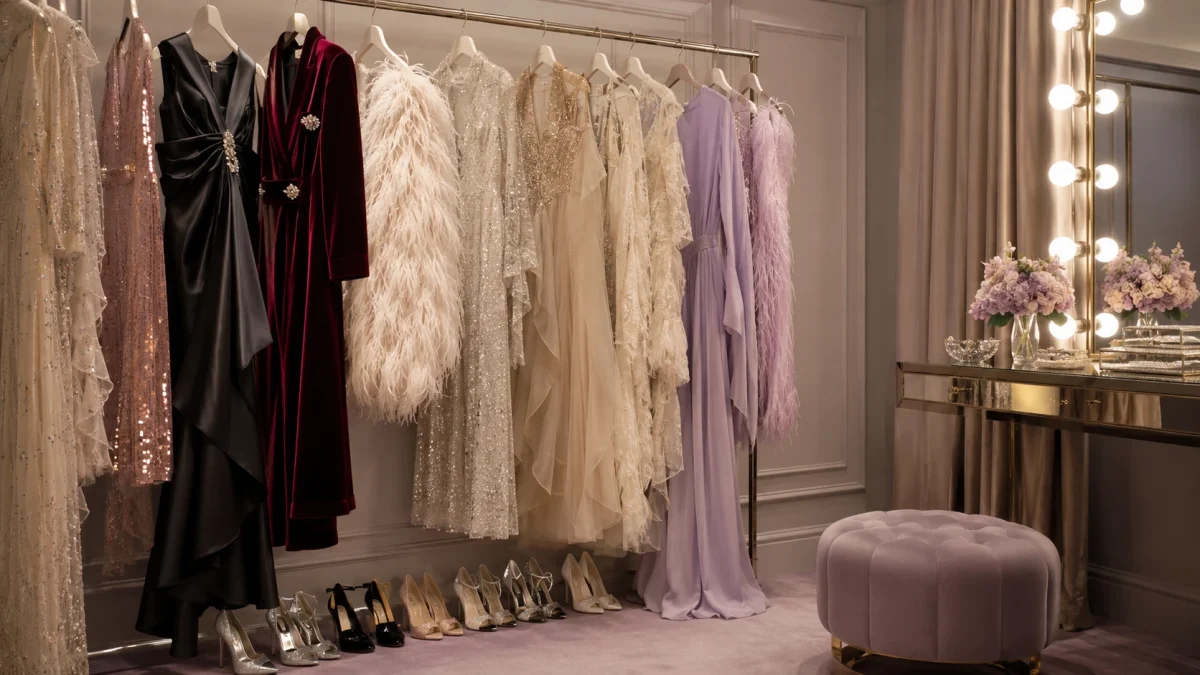
Our costume wardrobe is not decoration but a working tool: the character determines what the entrance looks like, how the room reacts in the first thirty seconds, and sometimes it is the whole difference between "a nice show" and "an evening people talk about". This post explains how to choose a character — not by what looks most impressive in a photograph, but by who the guest of honour is, who is in the room, and which entrance will actually work at your place.
Three questions that determine the character
Who the guest of honour is and what makes him laugh. A good character touches something of his — a profession, a hobby or an inside joke. Who is in the room. A mixed crowd with parents and sisters gets a character that is funny before it is seductive; a closed group of friends can take something sharper. Which entrance the space allows. Some characters come through the door, some need a corridor, and an entrance from a garden works entirely differently from one out of a lift. Those three answers narrow the choice almost by themselves.
The characters that work best — and for whom
The officer — the classic that never fails: a "noise complaint" that sounds real for exactly three seconds. Perfect for bachelor parties and crews. The waitress — the most natural entrance there is, and therefore the best for a shy guest of honour: he does not even realise the show has begun. The French maid — a burlesque classic for an elegant evening. The manager with a performance review — for a business evening or a milestone for someone who likes dry humour. The boxer — for a sporty crew. The mermaid — for an evening beside water, and the most photographed in the catalogue.
Character by type of event
A bachelor party — the officer, security, the personal trainer: entrances with "authority" that collapses into laughter. A birthday at forty or fifty — the waitress, the diva, the manager; something with humour and without embarrassment. A couples' evening — the lounge lady or the retro vamp, because there you need atmosphere rather than shock. A company evening — visual characters with no "victim" from the audience: the podium angel, carnival, the light show. And for an evening with guests from abroad — a character that needs no translation at all.
The characters by family
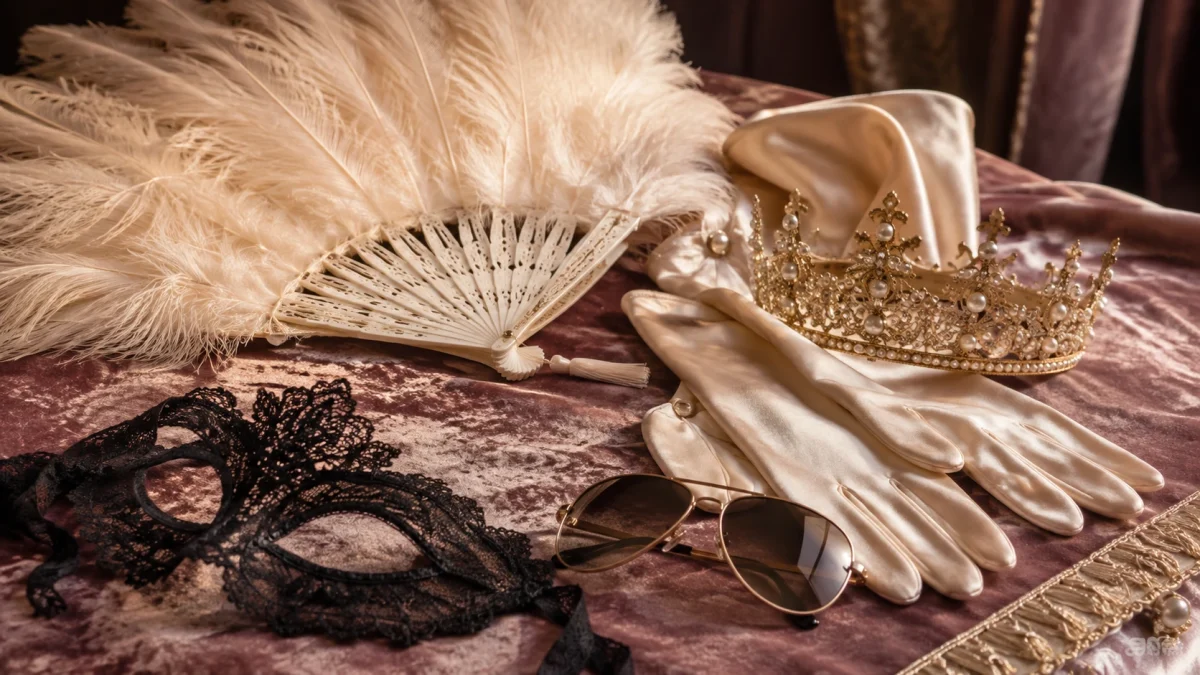
Our wardrobe divides into six families, which helps narrow things fast. Authority — the officer, security, an inspector: an entrance with tension that collapses into laughter. Service — the waitress, a courier, the maid: the most natural entrance. Glamour — the diva, the podium angel, the film star: visual and free of embarrassment. Fantasy — the mermaid, the desert goddess, the gothic queen: impressive and photographed. Sport — the boxer, the trainer, the carnival dancer: high energy. Classic — burlesque with a fan, a boa, the cabaret bunny. Tell us a family and we suggest a precise character.
A character for a shy guest of honour — the short guide
Four rules. A covert entrance rather than a declared one. A service character — a waitress or a courier, because it demands no acting from him. No chair in the middle of the room at the start; that can come gradually or not at all. And someone in the crew who knows and can help the dancer read the situation. Those four turn an evening that could have been awkward into one he genuinely enjoys — which is exactly why we ask about him in advance.
The entrance: what happens in the first thirty seconds
This is the part we invest in most, and usually what determines the whole evening. There are two kinds of entrance. The covert entrance — the dancer arrives as a "real" character (a waitress, a neighbour, a courier), and the room does not realise anything is happening for a minute or two; this works excellently on a shy guest of honour and on a mixed crowd. The declared entrance — music, light, a full character, and everyone knows immediately; excellent for large crews and high energy. We recommend one of the two based on what you describe.
What to prepare so the character works
Less than you would think, but three details matter. Who opens the door — better someone who knows, rather than the guest of honour himself. Where the guest of honour sits — for a covert entrance, preferably with his back to the door. What not to tell — if the whole crew knows the character, somebody always gives it away with a look. If a small prop would help — a glass for the bar, a clipboard for an inspection, a briefcase for documents — we tell you in advance in chat, and it is usually something you already have at home.
Can we book two characters?
You can, and it is one of the most worthwhile things to ask for. An hour-long show has room for two characters — the entrance in one and the centrepiece in the other, with a quick change between. It feels like two shows and costs not a shekel more. One thing though: choose two characters from different worlds, otherwise the change goes unnoticed. The dancer will recommend the combination based on what she brings with her, and the full wardrobe is on the costume show page.
What does not work — from experience
A character the guest of honour does not get. If the reference is too niche or from a field he does not know, the joke falls flat. A character that demands instant cooperation from a shy person. Not everyone wants to play "the interrogated" in front of twenty friends. Two similar characters in a row. And a character that clashes with the crowd — for instance an authority role in front of a group with internal hierarchy. We spot all four cases in chat if you tell us who is in the room, which is why two lines are worth writing.
How to ask
Simply write the character's name in a message, or describe what you want — "something with authority", "something romantic", "something that will make the parents laugh too". We will tell you who on the team does it best and what it requires from the space. Requesting a character is free and does not change the price per the price list, and even at the last minute it is usually possible — because most costumes travel in the bag anyway.
Frequently asked
By three questions: who the guest of honour is and what makes him laugh, who is in the room, and which entrance your space allows.
The officer for bachelor parties and the waitress for a shy guest of honour. For an elegant evening — the French maid or the retro vamp.
Yes, at no extra cost: one for the entrance and one for the centrepiece. Choose two from different worlds so the change registers.
In a covert one the dancer arrives as a real character and the room does not realise for a minute or two; in a declared one there is music and light and everyone knows at once.
Usually not. If a character needs a small detail — a glass, a clipboard, a briefcase — we tell you in advance, and it is almost always something you have at home.
No. The character is included in the price per the price list, and even at the last minute it is usually possible because the costumes travel in the bag.
The identity of the character. If everyone knows, somebody gives it away with a look — and the surprise is worth half the evening.