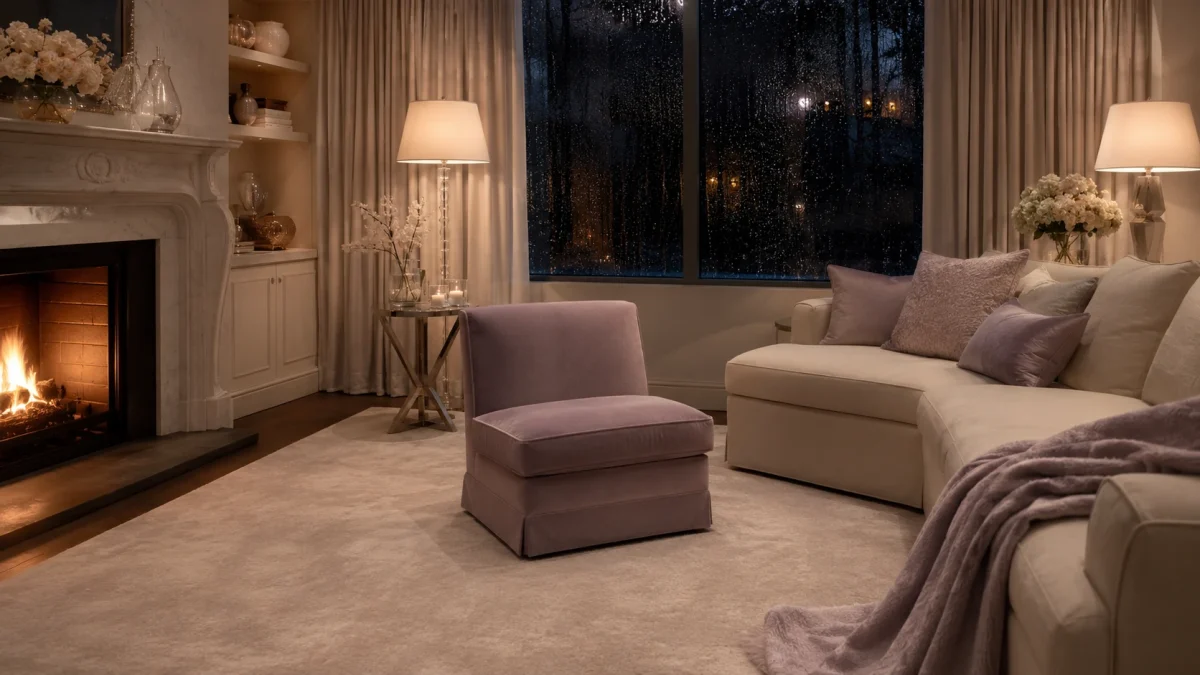
In summer everyone thinks about rooftops and pools; in winter most people simply do not think about a show at all — and that is a mistake. Winter is one of our best seasons: the evenings are long, everyone is at home, and a living room with low lighting produces an atmosphere no garden can. This post explains what a good winter show looks like, what changes compared with summer, and which styles flourish precisely between November and March.
Why winter works
Three practical reasons. Darkness comes early — by half past five you can work with low lighting, which means an evening can start at eight and end at a reasonable hour. Everyone is at home — fewer holidays, fewer competing events, and a calendar in which coordinating a whole crew is easier. The atmosphere — a living room with lamps, a blanket on the sofa and perhaps a lit fireplace is exactly the space our slow styles were built for. And in addition: this is the season when a date is easiest to get, weekends included.
What changes compared with summer
In summer we adapt the set to wind and flooring; in winter to three other things. Heating — a cold room changes a show, so it is worth switching it on half an hour ahead; the difference shows in every movement. The floor — cold, slippery parquet sometimes needs a small rug in the performance area. The hour — winter evenings start earlier, usually 20:30–21:30, because the evening began at half past five anyway. What does not change: the price per the price list, the length of the show, and arrival times to all eighteen cities.
The styles that flourish in winter
This season belongs to the slow, intimate styles. Lilit — gothic by candlelight, exactly her space and her season. Shira — the slow genre, which sounds different in a closed room. Ester — noir with whiskey and low light. Tamar — the chamber format for an evening of up to ten. And Michal for couples' evenings beside a lit fireplace. Summer belongs to energy and water; winter belongs to closeness, atmosphere and small details.
Fireplace, candles and lighting
If you have a fireplace, light it — it is the most flattering light there is, and it does half the work. No fireplace? Two warm lamps in the corners and candles on the table produce a similar result. What does matter: kill the ceiling light. A room lit by white LEDs turns any show into a lecture, and this is the most rewarding two-minute change you can make. And if you are booking Nicole with the light show — there full darkness is exactly what is needed, and it is easier to achieve in winter than in any other season.
The winter evenings we love most
A couples' evening in the living room. A fireplace, wine, a chamber format — the format that has grown most with us in recent years. A home birthday of ten to fifteen people. No pressure from a garden, no neighbours on the street, and everyone sitting close. A small company evening in an office or loft. Winter is the season of year-end gatherings, and exactly the time for the three short appearances format. A rainy evening moved indoors from the garden. It happens, and it almost always turns out better than planned.
What about rain and weather
If the show is indoors anyway, rain changes nothing — except the drive, which can take ten minutes longer; we update you in writing if that happens. If you planned a covered yard or an enclosed balcony, it is worth checking there is heating and the floor is not wet. And if the evening was meant to be outdoors and the weather turned, we move inside, with no change in price and no drama. The dancer arrives with a set suited to both scenarios anyway, and it is part of the normal coordination.
A typical winter evening
17:30 it is dark outside and you switch the heating on. 19:30 the guests arrive, eat, the atmosphere warms. 20:45 the "I am here" message arrives; the dancer comes up in everyday clothing and changes in a room. 21:00 the ceiling light goes off, two lamps stay on, and the show begins. By 22:00 it is over, and the crew stays in the living room for another two hours — in winter nobody rushes out into the cold. That is the big difference from summer: the evening does not disperse, it gathers.
A common winter mistake
Leaving the room cold "because everyone is dressed anyway". It is a mistake you feel immediately: a frozen crowd does not open up, and the dancer is working cold muscles. It is worth switching the heating on half an hour before and turning it off during the show if it gets too warm — a two-degree difference changes the whole energy in the room. A second mistake: opening a window midway "for air". If air is needed, better before or after, and not exactly when the show is at its peak.
Why this is the best time to book
An entirely practical reason: between November and March the calendar is freer. The most requested dancers are available on weekends too, a date can be taken two days ahead rather than a week, and even a last-minute booking almost always works out. If you specifically wanted a particular dancer and it did not work in summer — winter is the time. The price, of course, is identical: we have no seasonal pricing and no night supplement in any month.
The winter checklist
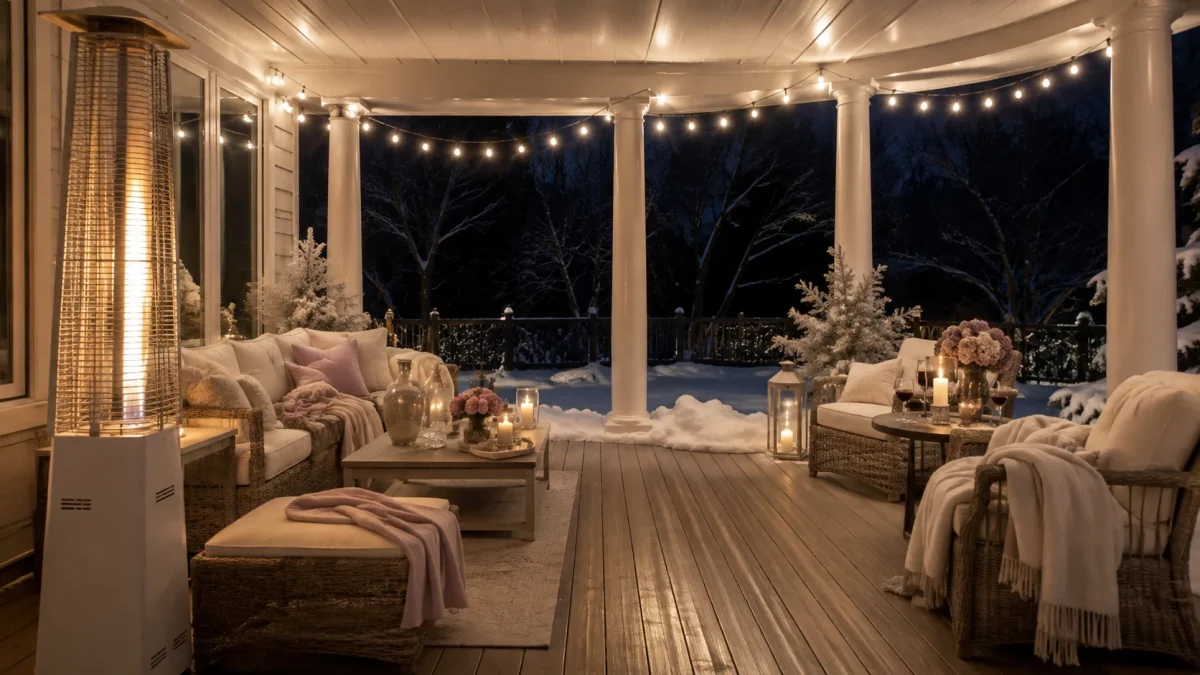
Heating switched on half an hour ahead; a small rug if the floor is cold and slippery; two warm lamps or candles instead of the ceiling light; a stable chair without armrests; and a small place to change — ideally a heated room rather than an enclosed balcony. If there is a fireplace, light it. If there are blankets on the sofa, leave them — they are part of the atmosphere and get in the way of nothing. The rest we bring with us, and in this season too we arrive at any hour, on any day.
Frequently asked
The opposite: the evenings are long, everyone is at home, and the atmosphere of a living room with low lighting beats any garden. The calendar is freer too.
Heating switched on half an hour ahead, a small rug if the floor is cold and slippery, and an earlier start — usually 20:30–21:30.
The slow, intimate ones: Lilit by candlelight, Shira, Ester with noir, Tamar for the chamber format, Michal for a couples' evening by the fire.
Very much so. It is the most flattering light there is. No fireplace? Two warm lamps and candles produce a similar result.
For an indoor show barely, apart from ten extra minutes of driving. If you planned a garden and the weather turned, we move inside with no change in price.
No. There is no seasonal pricing and no night supplement in any month — exactly the same price list all year.
The calendar is freer: a date can be taken two days ahead, and the most requested dancers are available on weekends too.