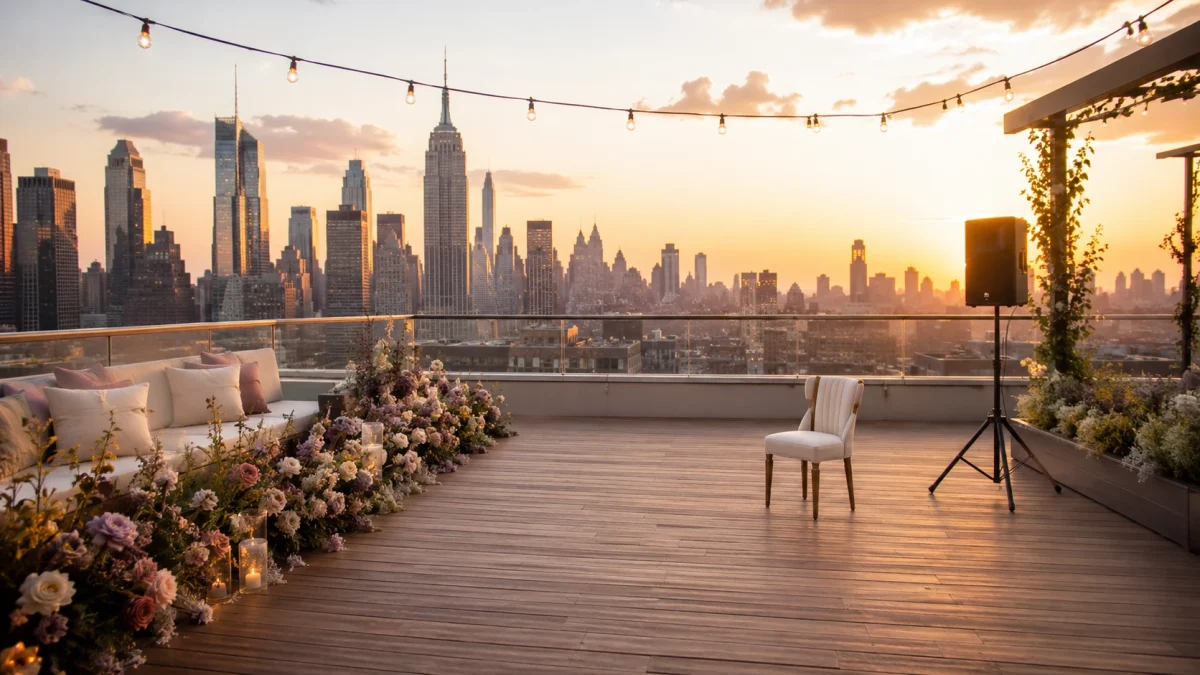
Between April and October more than half our evenings move outdoors — to rooftops, gardens and pools — and that is a bigger change than it sounds. An outdoor show is not the same show with sky instead of a ceiling: the light changes, the floor changes, the sound changes, and above all the wind. This post gathers everything we have learned about outdoor shows in Israel — what works, what breaks an evening, and how to plan so the result is the most beautiful evening of your summer.
Wind — the factor that surprises most
This is the detail nobody considers and the one that changes the most. A light breeze three floors up is a strong wind on a rooftop, and fabric, a veil, feathers or a chiffon cover behave entirely differently in it. For Tala the veil work is the heart of the show, and for Dina it is the fan — both need their set adapted in advance when working outdoors. The solution is simple: tell us the show is on a roof or an open terrace, and the dancer arrives with an adapted set. Without that sentence in your message, we discover it together in the second minute — and that is a waste.
The floor: the most dangerous element
Soft grass looks wonderful and is very hard on heels; a wet floor by a pool is genuinely dangerous; and old paving with a raised break is an injury waiting to happen. What does work: wooden decking, level paving, or a small outdoor rug in the performance area. It takes two minutes to prepare, and it is the single most important preparation for an outdoor evening. If everything is grass, we bring a solution or suggest doing the centrepiece on the terrace and leaving the lawn to the audience.
Light: the golden hour beats any lighting rig
If you have a garden or a rooftop, the smartest thing you can do is time the entrance to sunset. The light at that hour does for the picture what no floodlight can, and it is the format Karina built her entire set around. After dark the rule reverses: kill the white floodlight and switch on string lights, lanterns or two warm lamps. Strong white light in a garden turns any show into a car park, and it is a two-minute change that transforms the whole evening.
Sound outdoors: why it sounds thin
In an open space there are no walls to return the sound, so the same speaker that sounds excellent in a living room sounds thin in a garden. Three solutions: place the speaker against a wall or in a corner rather than in the middle; raise it to ear height instead of leaving it on the floor; and make sure power is nearby. If your sound is weak, say so and we bring our own speaker at no extra charge. Outdoors this is not a luxury but a necessity: a show without bass is half a show.
The pool: the most beautiful, and the most demanding
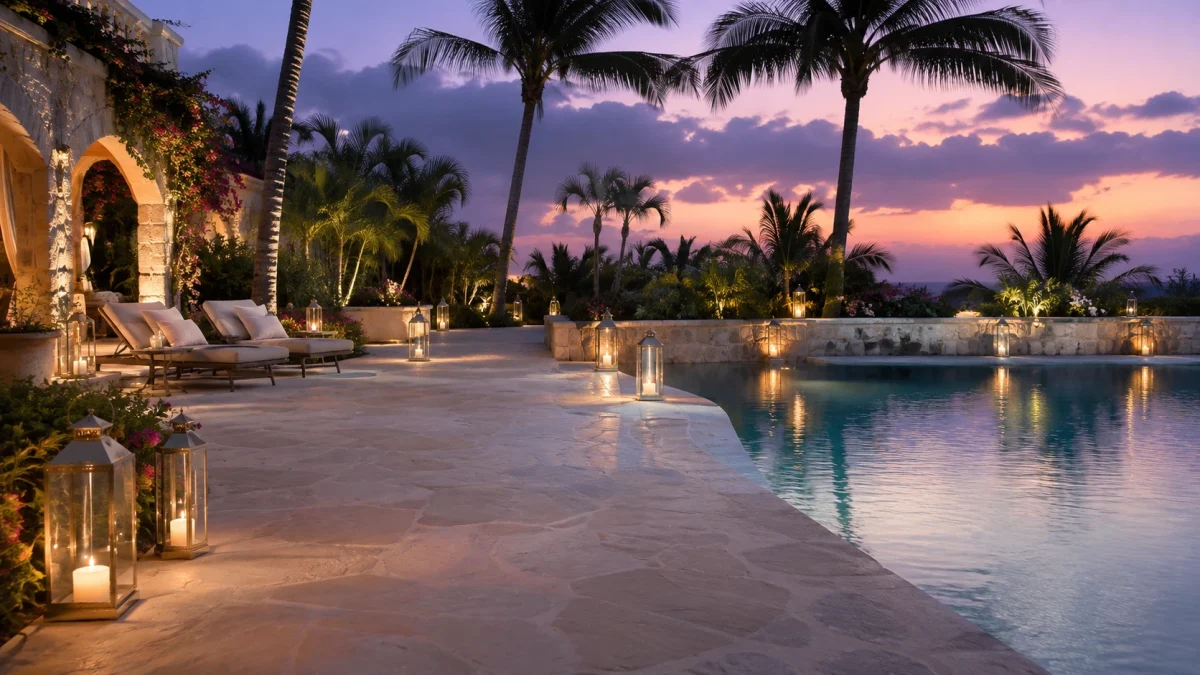
A show beside water is among the most beautiful we do — the reflection does half the work, and at sunset it looks like a photograph. What to check: the performance area is completely dry and away from the edge; there is no tap or hose quietly wetting it; and if anyone intends to get into the water at the end, that it happens after the show rather than during. Nicole with her light show looks better beside a pool than anywhere else, and that is our first recommendation for a summer evening with water.
Neighbours in summer: the maths changes
An open window in summer means your music reaches the neighbours at twice the volume it would in winter. In neighbourhoods of private houses such as Shoham or Hod HaSharon it is barely relevant — the houses stand well apart. In buildings and shared yards it is worth lowering the volume after eleven or finishing the main section before then. We suggest an exact hour based on the type of venue, and it is part of the normal coordination in chat — not something you need to work out alone.
Heat: what it does to the dancer and the crowd
In July and August it is thirty degrees and humid even in the evening. Practically that means three things: cold water within reach for the dancer and for you; a shaded or ventilated area to change in rather than a closed room with no air conditioning; and later timing in those months — a show at eight in the evening in August is simply too hot for everyone. We recommend half past nine onwards, which also works better for the light. In the other months there is no restriction at all.
What to do if the weather changes
In Israel this is rare in summer, but it happens — especially in April and October. Our rule: decide two hours before, not at the last minute. If strong wind or rain is forecast, move indoors — and the dancer arrives with a set for both scenarios anyway. There is no penalty, no change in price, and no need to cancel. What does matter: having an indoor alternative, even a small living room. A house with a garden is always covered; at a venue that is entirely outdoors, such as an open roof, it is worth thinking about at the moment of booking.
What changes between the months
April and May — the most pleasant time outdoors: not hot, long evenings, moderate wind. June and July — still excellent, but starting later. August — the most humid month; we recommend water, a shaded area, and timing around ten in the evening. September and October — our favourite season: the heat drops, the sea is still warm, and sunset falls at a perfect hour for a show. If you are flexible on the date and want a perfect outdoor evening, September is the safest bet there is.
The outdoor checklist
A level, dry surface in the performance area; a stable chair without armrests; two warm lamps or string lights instead of a floodlight; a power socket within reasonable reach; a speaker at ear height, or tell us and we bring one; a room or shaded corner to change in; and cold water. If there is a pool — make sure the area is dry. Send us one photograph of the garden or roof and we will tell you exactly where to place everything. Nothing more is needed; the rest we bring with us.
Frequently asked
The wind and the floor. Tell us the show is outdoors and the set gets adapted in advance; and prepare a level, dry surface in the performance area.
For heels, yes. Decking, level paving or a small outdoor rug solves it in two minutes; otherwise we suggest doing the centrepiece on the terrace.
A show at sunset is the most beautiful, and any hour after that works. In July and August we recommend half past nine onwards because of the heat.
Kill the white floodlight and switch on string lights, lanterns or two warm lamps. It is the most rewarding change in an outdoor evening.
Place it against a wall and raise it to ear height. If it is still weak, say so and we bring our own at no extra charge.
Absolutely, and it is among the most beautiful there is. It needs a dry area away from the edge, and anyone entering the water only after the show.
Yes, open windows double it. In private houses it is barely relevant; in buildings we set an exact hour and lower the volume later on.